Home / Closeboard fencing
Closeboard fencing in Worthing
Overlapping vertical boards fixed on site. The strongest timber fence for exposed gardens.
What is it?
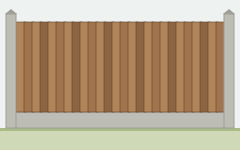
Closeboard (also called featheredge) fencing is built in place: posts, horizontal rails, then overlapping vertical boards nailed on one by one, usually with a gravel board at the bottom. Because it is not a panel slotted between posts, it handles wind far better.
Why people choose it
- Very strong, the usual choice for windy coastal gardens
- Built to fit slopes and odd lengths without gaps
- Damaged boards can be replaced one at a time
- Looks the same from both sides if built with the rails hidden
Things to watch
- Costs more than standard panels
- Takes longer to build
- Ask for pressure treated timber and galvanised or stainless nails
- Concrete or timber posts change the price and look
Rough cost
| Indicative price | £165 to £255 per panel (about £90 to £140 per metre) |
|---|---|
| Time on site | About 1 to 2 days for a typical garden |
Removing an old fence, slopes, tricky access and concrete posts all affect the price. Use the cost guide for a rough figure, then get a firm price from a visit.
Questions
Is closeboard better than panels?
For strength, yes. Boards are fixed to rails on site rather than sitting in a frame, so there is no panel to blow out in a storm. It costs more, but it is the fence most fencers recommend near the coast.
How long does closeboard last?
Pressure treated closeboard on concrete posts and gravel boards often lasts 20 years or more. Timber posts are usually the first thing to fail.
Concrete or timber posts?
Concrete posts do not rot and suit panels and closeboard alike. Timber posts look softer and are easier to fix boards to, but need replacing sooner.